
What Homeowners Need to Know: Designing a functional and beautiful kitchen starts with thoughtful cabinet layout. Whether you’re remodeling your existing space or building a new kitchen, understanding how cabinets are organized can help you make informed choices that fit both your style and daily needs. Let’s go over the basics:
1. Base Cabinets: The Foundation of Your Kitchen
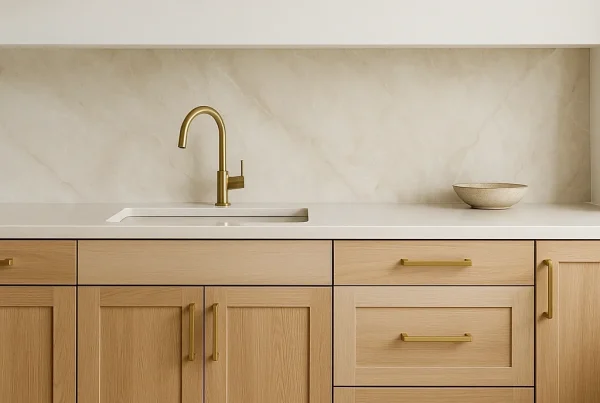
Base cabinets are installed directly on the floor and typically support your countertops. These cabinets are essential for storing heavier items like pots, pans, and appliances. Common sizes range from 9” to 48” wide.
Types of base cabinets:
- Standard base cabinets with doors and shelves
- Drawer base cabinets (perfect for utensils and cookware)
- Sink base cabinets (open at the top to accommodate plumbing)
- Corner base cabinets (maximize otherwise unused space)
2. Wall Cabinets: Accessible Storage at Eye Level
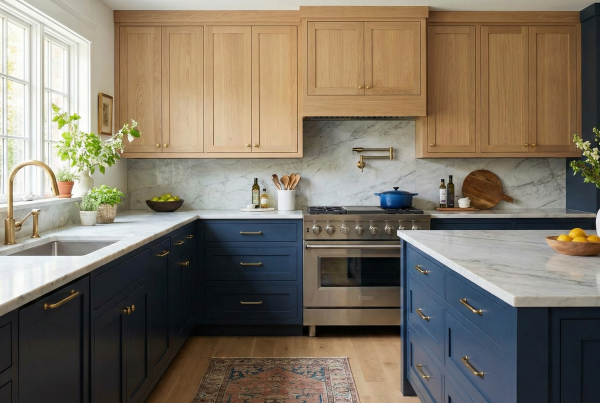
Wall cabinets are mounted above the countertops and are ideal for storing dishes, glasses, spices, and pantry items. Standard wall cabinet heights include 30″, 36″, and 42”, depending on ceiling height and design style.
Pro tip: Taller wall cabinets can help maximize storage in smaller kitchens.
3. Pantry Cabinets: Maximize Vertical Storage
Pantry cabinets, also known as tall cabinets, typically measure 84″ to 96″ in height. These cabinets are ideal for storing bulk items, food supplies, and larger kitchen essentials. Placing a pantry cabinet near the fridge or cooking area enhances kitchen flow and accessibility.
4. Specialty Cabinets: Customization for Functionality
Add functionality to your kitchen with specialty cabinets like:
- Pull-out spice racks
- Trash bin pull-outs
- Corner lazy Susans
- Appliance garages
- Wine racks or open shelves for decorative storage
5. Island or Peninsula Cabinets: A Gathering Spot
Islands or peninsulas add countertop space and create a natural gathering point in open-concept kitchens. Base cabinets are used to build the structure, and you can incorporate drawers, shelves, or even a microwave base cabinet for convenience.
6. Workflow and Zones: Keep It Practical
Design your kitchen with work zones in mind:
- Prep zone near sinks and cutting space
- Cooking zone around the stove and oven
- Storage zone for dry goods and dishes
- Cleanup zone around the sink and dishwasher
By planning cabinet layout around these zones, you’ll create a more efficient and enjoyable cooking experience.
Ready to Plan Your New Kitchen?
At Florida Countertop Factory, we help our clients choose not only the perfect countertops but also the right cabinet layout to suit their space and lifestyle. Whether you’re designing for a cozy condo or a spacious family home, we’re here to bring your vision to life.
Contact us today for a personalized consultation!